Effect of date vinegar spraying on the growth and resistance of cucumber plants (Cucumis sativus L.) infected with vascular wilt caused by the fungus Fusarium oxysporum
DOI:
https://doi.org/10.69923/ch5ff823Keywords:
Date vinegar, Cucumis sativus L, Fusarium oxysporum, Growth, BiocontrolAbstract
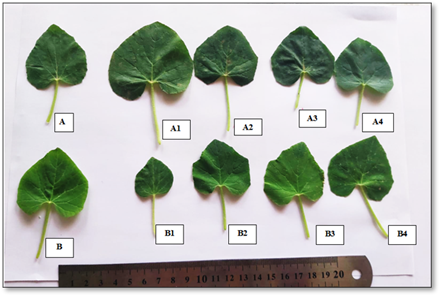
This study investigated the efficacy of different concentrations of date vinegar in inhibiting the growth of the phytopathogenic fungus Fusarium oxysporum. The results demonstrated that date vinegar suppressed fungal growth, with the 20% concentration achieving complete inhibition (100%) compared with the control treatment, which exhibited no inhibition (0%). The findings also revealed that the germination percentage of cucumber seeds after 10 days increased with increasing concentrations of date vinegar compared with the treatment inoculated with the pathogen alone. The highest germination percentage (95.14%) was recorded in the 15% and 20% date vinegar treatments. Furthermore, the seedling mortality rate was reduced to 0% in all treatments containing date vinegar, whereas the treatment inoculated solely with the pathogenic fungus exhibited a seedling mortality rate of 100% after 14 days. The greenhouse experiment further demonstrated the beneficial effects of date vinegar application on the vegetative growth characteristics of cucumber plants cultivated in plastic pots. Significant improvements were observed in plant height, fresh and dry biomass, and leaf area compared with the pathogen-inoculated treatment. In addition, date vinegar treatments reduced disease severity caused by the pathogenic fungus, resulting in improved plant growth and vigor. These findings indicate that date vinegar has considerable potential as an ecofriendly and sustainable alternative for the management of fungal diseases in cucumber plants. The results of the present study represent a promising step toward sustainable agricultural development and environmental protection by reducing dependence on synthetic chemical pesticides that may adversely affect ecosystems and human health.
Downloads
References
[1] K. Singh, M. Sharma, and S. K. Singh, “Effect of plant growth regulators on fruit yield and quality of guava (Psidium guajava L.) cv. Allahabad Safeda,” Journal of Pure and Applied Microbiology, vol. 11, no. 2, pp. 1149–1154, 2017, doi: 10.22207/JPAM.11.2.61.
[2] S. Abdelkrim, S. H. Jebara, and M. Jebara, “Antioxidant system responses and compatible solutes as contributing factors to lead accumulation and tolerance in Lathyrus sativus inoculated with plant growth-promoting rhizobacteria,” Ecotoxicology and Environmental Safety, vol. 166, pp. 427–436, 2018, doi: 10.1016/j.ecoenv.2018.09.115.
[3] M. J. Akhtar, S. Ullah, I. Ahmad, A. Rauf, S. M. Nadeem, M. Y. Khan, and L. Bulgariu, “Nickel phytoextraction through bacterial inoculation in Raphanus sativus,” Chemosphere, vol. 190, pp. 234–242, 2018, doi: 10.1016/j.chemosphere.2017.09.136.
[4] M. V. Arasu, P. Vijayaraghavan, S. Ilavenil, N. A. Al-Dhabi, and K. C. Choi, “Essential oils of four medicinal plants and their protective properties in plum fruits against spoilage bacteria and fungi,” Industrial Crops and Products, vol. 133, pp. 54–62, 2019, doi: 10.1016/j.indcrop.2019.03.018.
[5] M. F. Abdel-Monaim, “Improvement of biocontrol of damping-off and root rot/wilt of faba bean by salicylic acid and hydrogen peroxide,” Mycobiology, vol. 41, no. 1, pp. 47–55, 2013, doi: 10.5941/MYCO.2013.41.1.47.
[6] D. I. Tsitsigiannis, M. Dimakopoulou, P. P. Antoniou, and E. C. Tjamos, “Biological control strategies of mycotoxigenic fungi and associated mycotoxins in Mediterranean basin crops,” Phytopathologia Mediterranea, vol. 51, no. 1, pp. 158–174, 2012, doi: 10.14601/Phytopathol_Mediterr-9497.
[7] W. Ramakrishna, R. Yadav, and K. Li, “Plant growth-promoting bacteria in agriculture: Two sides of a coin,” Applied Soil Ecology, vol. 138, pp. 10–18, 2019, doi: 10.1016/j.apsoil.2019.02.019.
[8] L. Solieri and P. Giudici, “Vinegars of the world,” in Vinegars of the World, Milan: Springer, 2009, pp. 1–16, doi: 10.1007/978-88-470-0866-3_1.
[9] S. Hailu, S. Admassu, and K. Jha, “Vinegar production technology: An overview,” Beverage and Food World, vol. 39, no. 2, pp. 29–32, 2012.
[10] S. H. El-Helaly, A. Y. Allam, and M. Z. El-Shennawy, “Effect of some aqueous plant extracts on controlling orange green mold disease and quality of ‘Washington’ navel orange,” Alexandria Science Exchange Journal, vol. 43, no. 1, pp. 141–149, 2022, doi: 10.21608/ASEJAIQJSAE.2022.226129.
[11] P. Kipngeno, T. Losenge, N. Maina, E. Kahangi, and P. Juma, “Efficacy of Bacillus subtilis and Trichoderma asperellum in the management of Fusarium wilt in tomatoes,” Biological Control, vol. 90, pp. 92–95, 2015, doi: 10.1016/j.biocontrol.2015.05.017.
[12] P. A. Velasquez-Vasconez and D. Andrade Díaz, “Leaf Area Package: A tool for estimating leaf area in Andean fruit species,” International Journal of Plant Biology, vol. 15, no. 1, pp. 102–109, 2024, doi: 10.3390/ijpb15010009.
[13] D. P. Kunte, T. Y. Yeole, S. A. Chiplonkar, and D. R. Ranade, “Inactivation of Salmonella typhi by high levels of volatile fatty acids during anaerobic digestion,” Journal of Applied Microbiology, vol. 84, no. 1, pp. 138–142, 1998, doi: 10.1046/j.1365-2672.1997.00335.x.
[14] N. Du, L. Shi, L. Du, Y. Yuan, B. Li, T. Sang, J. Sun, S. Shu, and S. Guo, “Effect of vinegar residue compost amendments on cucumber growth and Fusarium wilt,” Environmental Science and Pollution Research, vol. 22, no. 23, pp. 19133–19141, 2015, doi: 10.1007/s11356-015-4816-9.
[15] Y. Li, D. Ding, J. He, J. Zhang, J. Zhao, Q. Zhao, C. Hou, and Z. Zhu, “Effect of wood vinegar on the respiration of plant pathogenic fungi,” Agricultural Engineering, vol. 13, no. 6, pp. 138–143, 2023, doi: 10.19998/j.cnki.2095-1795.2023.06.024.
[16] M. Saberi, A. Sarpeleh, H. Askary, and F. Rafiei, “The effectiveness of wood vinegar in controlling Rhizoctonia solani and Sclerotinia sclerotiorum in greenhouse cucumber,” International Journal of Agricultural Research and Natural Resources, vol. 1, no. 4, pp. 39–43, 2013.
[17] S. S. Lee, B. J. Ahn, and S. T. Cho, “Antimicrobial activities of wood vinegar and its application as a natural fungicide and food preservative,” Journal of the Korean Wood Science and Technology, vol. 38, no. 4, pp. 341–348, 2010, doi: 10.5658/WOOD.2010.38.4.341.
[18] M. Akkus, A. Cuglar, and Y. Aesut, “Antifungal and larvicidal effects of wood vinegar on wood-destroying fungi and insects,” Maderas: Ciencia y Tecnología, vol. 24, pp. 1–10, 2022, doi: 10.4067/S0718-221X2022000100437.
[19] K. W. Jeong, B. S. Kim, V. U. Ultra, and S. C. Lee, “Effects of rhizosphere microorganisms and wood vinegar mixtures on rice growth and soil properties,” Korean Journal of Crop Science, vol. 60, no. 3, pp. 355–365, 2015, doi: 10.7740/kjcs.2015.60.3.355.
Downloads
Published
License
Copyright (c) 2026 Iraqi Journal for Applied Science

This work is licensed under a Creative Commons Attribution 4.0 International License.
Licenses and Copyright
The copyright of this article is retained by the author(s).
This article is published by the Iraqi Journal for Applied Science (IJAS) under the Creative Commons Attribution 4.0 International License (CC BY 4.0).
This license permits unrestricted use, distribution, reproduction, adaptation, and reuse of the work in any medium or format, including commercial use, provided that appropriate credit is given to the original author(s) and the source, a link to the license is provided, and any modifications are indicated.
Authors retain full copyright of their work and grant IJAS a non-exclusive license to publish, archive, preserve, and disseminate the article, including registration of metadata and Digital Object Identifiers (DOIs) through Crossref.
Any third-party material included in this article remains subject to its respective copyright and licensing conditions. Authors are responsible for obtaining all necessary permissions for such material before publication.
For complete details regarding copyright, licensing, permissions, and reuse, please refer to the journal's Copyright and Licensing Policy available on the IJAS website.
License: https://creativecommons.org/licenses/by/4.0/
How to Cite