Microbial Indoor Air Pollution of Buildings at Al-Karkh University of Science/Abu Ghraib, Iraq
DOI:
https://doi.org/10.69923/kyapgp90Keywords:
air pollution, indoor, bacteria, fungiAbstract
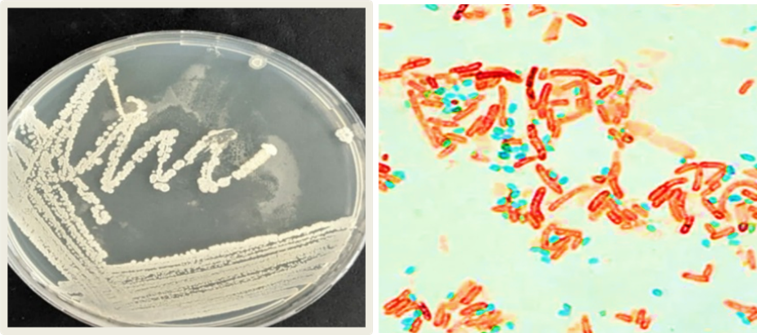
Indoor air pollution causes many diseases and health complications. According to the World Health Organization, air pollution is responsible for the premature death of 7 million people. The aim of the current study was to estimate the airborne microorganisms, noise, and chemical hazards for indoor air quality in the buildings of Al-Karkh University of Science. One hundred ninety-two samples were collected by open plate and exposed to the air for 60 min, and 192 samples were swabbed from hard surfaces. Air samples collected from various buildings of Al-Karkh University of Science revealed clear seasonal variations in indoor air quality. The maximum microbial load showed in the buildings of the College of Energy and Environmental Sciences and the College of Science, particularly in January. The major microbial species were Staphylococcus aureus and Bacillus spp., with increased fungal growth during the winter season, with Aspergillus niger and Penicillium. Noise levels were up to 75 dB, and maximum concentrations of H₂S and CO were observed during the month of January. A significant depletion of oxygen (0.1-1.5%) and high levels of flammable gases (11-25%) were also observed, particularly during the winter months. Indoor environments in Iraq are exposed to multiple sources of overlapping pollutants that place a significant burden on public health. Measured excess of WHO and EPA limits for noise, CO, and bioaerosol prevalence requires urgent mitigation efforts.
Downloads
References
[1] T. Ramesh, R. Yamunadevi, A. Sundaramanickam, M. Thangaraj, R. Kumaran, D. Annadurai, ''Biodiversity of the fungi in extreme marine environments. InFungi bio-prospects in sustainable agriculture, environment and nano-technology.'' Academic Press, pp. 75-100, 2021. https://doi.org/10.1016/B978-0-12-821925-6.00005-8
[2] JN. Mohammed, Z. Kassim, L. Anifowoshe, “Microbial evaluation of indoor air of science laboratories in IBB University Lapai, Nigeria,” Lapai Journal of Applied and Natural Sciences. Vol.1, no. 1, pp.167-175, 2016. https://www.lajans.com.ng/article.php?id=21
[3] R.L. Górny, Filamentous microorganisms and their fragments in indoor air: a review. Annals of agricultural and environmental medicine : AAEM, vol.11, no. 2, pp. 185–197, 2004. https://pubmed.ncbi.nlm.nih.gov/15627323/
[4] EC. Okafor, K. Opuene, ''Preliminary assessment of trace metals and polycyclic aromatic hydrocarbons in the sediments,'' International Journal of Environmental Science and Technology, Vol. 4, pp.233-240, 2007. https://doi.org/10.1007/BF03326279
[5] E. Capanna, Lazzaro Spallanzani: At the root of modern biology. Journal of Experimental Zoology, pp. 178-196, 1999. https://doi.org/10.1002/(SICI)1097-010X(19991015)285:3%3C178::AID-JEZ2%3E3.0.CO;2-%23
[6] L. Pasteur, Memoire sur les corpuscules organizes qui existent dans I’atmosphere, Annales de Chimie et de Physique, vol. 3, pp.5-110,1980.
[7] K. Singh, “Indoor Air Pollution”, ANSDN, vol. 4, no. 01, pp. 144-145, Oct. 2016. https://doi.org/10.22445/avsp.v4i1.4403
[8] V. Patella, G. Florio, D. Magliacane, A. Giuliano, MA. Crivellaro, D. Bartolomeo, ''Urban air pollution and climate change: “the Decalogue: allergy safe tree” for allergic and respiratory diseases care, '' Clinical Module in Allergy, Vol. 16, no. 1, 2018. https://hdl.handle.net/2158/1175358
[9] F. Palmieri, A. Koutsokera, E. Bernasconi, P. Junier, C. von Garnier, N. Ubags, ''Recent advances in fungal infections: From lung ecology to therapeutic strategies with a focus on Aspergillus spp.,'' Frontiers in medicine, vol. 9, 2022. https://doi.org/10.3389/fmed.2022.832510
[10] M. Oliveira, D. Oliveira, C. Lisboa, JL. Boechat, L. Delgado, ''Clinical manifestations of human exposure to fungi,'' Journal of Fungi, Vol. 9, no. 3, pp. 381, 2023. https://doi.org/10.3390/jof9030381
[11] PK. Nag, ''Sick Building Syndrome and Other Building-Related Illnesses, '' Office Buildings. , pp. 53–103, 2018, https://doi.org/10.1007/978-981-13-2577-9_3
[12] P. Badiee, Z. Hashemizadeh, ''Opportunistic invasive fungal infections: diagnosis & clinical management,'' Indian J Med Res., Vol. 139, no. 2, pp.195-204, 2014, https://pmc.ncbi.nlm.nih.gov/articles/PMC4001330/
[13] B. Weinhold, "Trilongins" offer insight into mold toxicity, Environ Health Perspect, vol. 121, no. 2, 2013, https://doi.org/10.1289/EHP.121-A44
[14] T. Li, Q.Marashly, JA. Kim, N. Li, MG. Chelu, ''Cardiac conduction diseases: understanding the molecular mechanisms to uncover targets for future treatments,'' Expert opinion on therapeutic targets. Vol. 28, no. 5, pp.385-400, 2024.https://doi.org/10.1080/14728222.2024.2351501
[15] SPSS (2019). Statistical Packages of Social Sciences- SPSS/IBM Statistics 26 step by step. 16th Edition. https://doi.org/10.4324/9780429056765.
[16] L. Pauly, and P. Geraldine, "Cigarette smoke, bacteria, mold, microbial toxins, and chronic lung inflammation," Journal of oncology, 2011, https://doi.org/10.1155/2011/819129
[17] J. Hurraß, R. Teubel, G. Fischer, et al. What effect do mycotoxins, cell wall components, enzymes and other mold components and metabolites have on our health?. Allergo J Int 33, pp.124–132, 2024, https://doi.org/10.1007/s40629-024-00295-8
[18] P. Kumar, MA. Kausar, AB. Singh, R. Singh, ''Biological contaminants in the indoor air environment and their impacts on human health,'' Air Quality, Atmosphere & Health, vol.14, no. 11, pp.1723-1736,2021, https://doi.org/10.1007/s11869-021-00978-z
[19] S. Sadrizadeh, R. Yao, F. Yuan, H. Awbi, W. Bahnfleth, Y. Bi, G. Cao, C. Croitoru, R. De Dear, F. Haghighat, P. Kumar, "Indoor air quality and health in schools: A critical review for developing the roadmap for the future school environment," Journal of Building Engineering, vol. 57, 104908, 2022, https://doi.org/10.1016/j.jobe.2022.104908
[20] S. Kubba, “Indoor environmental quality (IEQ),” LEED v4 Practices, Certification, and Accreditation Handbook, 303, 2015, https://doi.org/10.1016/B978-0-12-803830-7.00007-4
[21] R. Duan, K. Hao, & T. Yang, ''Air pollution and chronic obstructive pulmonary disease,'' Chronic diseases and translational medicine, vol.6, no.04, pp.260-269, 2020, https://doi.org/10.1016/j.cdtm.2020.05.004
[22] K. Naruka, and J. Gaur, “Microbial air contamination in a school,” Int. J. Curr. microbial. App., vol. 2, no. 12, pp. 404-410, 2013, https://www.ijcmas.com/vol-2-12/Kavita%20Naruka%20and%20Jyoti%20Gaur.pdf
[23] D.L. Surwill, P.Cruz, MP.Buttner, JR.Pharr, N. Lough, TT. Roehr, ''Airborne Fungal Monitoring in Healthcare Environments: A Systematic Review,'' Journal of Fungi, vol. 12, no. 5, 336, 2026, https://doi.org/10.3390/jof12050336
[24] A. Géry, JP. Bouchara, N. Heutte, et al. , "How to Assess Fungal Contamination of Indoor Air in Dwellings of Patients with Cystic Fibrosis?" Mycopathologia, 190, 62, 2025, https://doi.org/10.1007/s11046-025-00968-0
[25] S.A. Idris, M.M. Hanafiah, M. Ismail, et al., ''Laboratory air quality and microbiological contamination in a university building,'' Arab J Geosci, Vol. 13, 580, 2020, https://doi.org/10.1007/s12517-020-05564-8
[26] C. Sheik, and A. Rheam, et al., ''Assessment of Bacteria and Fungi in air from College of Applied Medical Sciences,'' International Research Journal of Biological Sciences, vol.4, no. 9, pp.1-5, 2015. https://www.isca.in/IJBS/Archive/v4/i9/7.ISCA-IRJBS-2015-120.php
[27] M. Sekulska, and et al ., ''Microbiological Quality of Indoor Air in University Rooms,'' Polish J. of Environ. Stud., vol.16, no.4, pp.623-632, 2007, https://www.pjoes.com/Microbiological-Quality-of-Indoor-Air-r-nin-University-Rooms,88030,0,2.html
[28] H.H. Mutib, SR. Oleiwi, D. Majeed Hameed, S. Suhail Hussein, ''Study of Bacterial Contamination in Operating theaters at Al-Hussein Teaching Hospital in Al-Samawah, Iraq.,'' Archives of Razi Institute, Vol.76, no. 6, pp.1671,2021, https://doi.org/10.22092/ari.2021.356365.1831
[29] G. M. Ikon, U. E. Etang, N. G. Akpan et al., “Microbial assessment of indoor air quality of laboratory sections in Obong University, Obong Ntak, Nigeria.,” International Journal of Research and Review, vol. 9, no. 11, pp. 345-355, 2022, https://doi.org/10.52403/ijrr.20221147
[30] A. Wael, ''Assessment of Air Quality Containing Fungi in Al-Nu’man Teaching Hospital,'' Journal of Biotechnology Research Center, vol. 18, no. 1, pp.11–18, 2024.https://doi.org/10.24126/jobrc.2024.18.1.706
[31] H. H. Al-Fattly, (2013). Comparative Study of Bacteria and fungi Air Polluted Slaughterhouse of Al-Diwaniya City. Kufa Journal for Veterinary Medical Sciences, vol.4, no. 1, pp.81-89, 2013, https://doi.org/10.36326/kjvs/2013/v4i13923)
[32] A. Mehrotra, SP. Shukla, AK. Shukla, MK. Manar, SK. Singh, M. Mehrotra, ''A comprehensive review of auditory and non-auditory effects of noise on human health,'' Noise and Health, vol. 26, no.121, pp.59-69, 2024, https://doi.org/10.4103/nah.nah_124_23
[33] J.Schwartz, “Air pollution and hospital admissions for heart disease in eight U.S. Counties,ˮ Epidemiology vol.10, pp.17-22, 1999. https://www.jstor.org/stable/3702177
[34] A.H. Al-Shammari, A.K. Jaber, & R. S. Khalaf, ''Assessment of indoor air quality and oxygen depletion in confined industrial environments in Iraq,'' Journal of Environmental Monitoring and Assessment, vol.193, no. 8, pp.540, 2021, https://doi.org/10.1007/s10661-021-09340-9
[35] S. Bhangar, SC. Cowlin, & WW. Nazaroff, “Indoor air composition and its effects on oxygen and carbon dioxide balance in residential buildings,” Environmental Science & Technology, vol. 53, no. 5, pp.2450–2458, 2019, https://doi.org/10.1021/acs.est.8b07135
[36] J.H. Lee, DW. Kim, & YS. Park, ''Influence of ventilation and occupant activity on indoor oxygen concentration in cold seasons,'' Building and Environment, 170, 106628, 2020.https://doi.org/10.1016/j.buildenv.2019.106628
[37] U.S. Environmental Protection Agency (EPA), “Indoor Air Quality (IAQ) and Health: Technical Report on Oxygen and CO₂ Balance in Buildings,” Washington, D.C.: EPA Office of Research and Development, 2022.
[38] F. Çalık, ''The Evaluation of Methane Gas Explosion Risk in Confined Spaces – A Case Study in the Ship Building Industry,'' JEPS, vol. 37, no. 2, pp. 144–152, June 2025, https://doi.org/10.7240/jeps.1600904
[39] SF. Victoria, SS. Carla, C. Lucas, P. Natasha, L. Santiago, AG. Sergio, MP. Juliarena, ''Seasonal spatial variations of urban methane concentrations in a medium-sized city determined by easily measure variables,'' Urban Climate, Vol. 53, 2024, https://doi.org/10.1016/j.uclim.2023.101798
[40] Y. Jia, Q. Zhang, Y. Wang, et al., Explosion and flow characteristics of combustible gases at stoichiometric concentrations indoors and outdoors. J Therm Anal Calorim ,2026. https://doi.org/10.1007/s10973-026-15583-4
[41] L. Yang, Y. Zhang, H. Wu, & W. Cheng, ''Assessing the Sustainable Development of Liquefied Petroleum Gas Storage and Transportation Under Energy Transition Based on the C-STSM Multidimensional Framework: China Case,'' Sustainability, vol.18, no.8, 3943, 2026, https://doi.org/10.3390/su18083943
[42] C. Bingqian, L. Sumei, L. Junjie, J. Nan, C. Qingyan, ''An energy-efficient exhaust hood for industrial buildings with strong thermal buoyancy,'' Energy and Buildings, Vol. 308, 2024, https://doi.org/10.1016/j.enbuild.2024.114036.
Downloads
Published
License
Copyright (c) 2026 Zahraa Jameel, Amna A. Mohsin, Marwa G. Hamdy (Author)

This work is licensed under a Creative Commons Attribution 4.0 International License.
Licenses and Copyright
The copyright of this article is retained by the author(s).
This article is published by the Iraqi Journal for Applied Science (IJAS) under the Creative Commons Attribution 4.0 International License (CC BY 4.0).
This license permits unrestricted use, distribution, reproduction, adaptation, and reuse of the work in any medium or format, including commercial use, provided that appropriate credit is given to the original author(s) and the source, a link to the license is provided, and any modifications are indicated.
Authors retain full copyright of their work and grant IJAS a non-exclusive license to publish, archive, preserve, and disseminate the article, including registration of metadata and Digital Object Identifiers (DOIs) through Crossref.
Any third-party material included in this article remains subject to its respective copyright and licensing conditions. Authors are responsible for obtaining all necessary permissions for such material before publication.
For complete details regarding copyright, licensing, permissions, and reuse, please refer to the journal's Copyright and Licensing Policy available on the IJAS website.
License: https://creativecommons.org/licenses/by/4.0/
How to Cite