Proposed Approaches for Sensor Node Deployment in Wireless Sensor Networks
DOI:
https://doi.org/10.69923/jms3f531Keywords:
WSN, Random deployment, Predefined deployment, mathematical model, Optimization, Grid deploymentAbstract
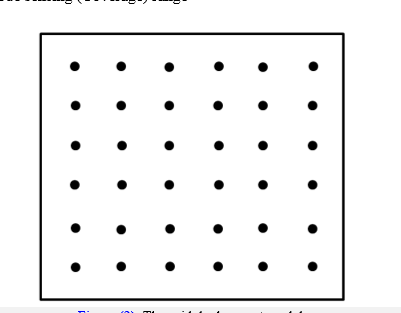
Sensor deployment is a crucial aspect of designing any wireless sensor networks. Deployment strategy significantly influences wireless sensor network performance. Various deployment strategies have been proposed to improve network connectivity and sensing coverage. Wireless sensor deployment is a complex problem that requires careful consideration of various factors, including the application, environment, energy consumption, and communication technologies. Different deployment methods and strategies can be used depending on the objectives and constraints of the sensor network. Many issues must be considered when proposing any sensor deployment approach. Most of these issues are coverage range, network connectivity, communication range, sensor location, and scalability. In this research, a random deployment approach is proposed to estimate the required number of sensors to be deployed in a certain area. A predefined deployment model is also developed to calculate the optimal number of sensors and their distribution coordinates based on grid deployment. A mathematical optimization model is proposed to find the optimum required number of sensor nodes to be distributed in a specific area by selecting the optimal sensor distribution among different places. This developed model is validated by different simulation experiments. It also aims to achieve maximum possible connectivity and maximum sensing coverage to offer a certain limit of consistency using the minimum number of nodes without long simulation experiments. This is achieved by enabling any sensor to communicate with one or more nearby sensors at any given time. The simulation results proved to be largely consistent with the results of the mathematical model.
Downloads
References
[1] M. Trigka, “Wireless Sensor Networks: From Fundamentals and Applications to Innovations and Future Trends,” IEEE Access, vol. 13, no. 4, April 2025, pp. 96365–96399, 2025. DOI: 10.1109/ACCESS.2025.3572328
[2] L. Zhang, “A Deployment and Coverage Optimization Algorithm for Self-Powered Wireless Sensor Networks Based on Hybrid Swarm Intelligence,” IEEE Sens. J., vol. 23, no. 18, pp. 20705–20714, 2023. DOI: 10.1109/JSEN.2022.3230955
[3] F. Tossa, Y. Faga, W. Abdou, E. C. Ezin, and P. Gouton, “Wireless Sensor Network Deployment: Architecture, Objectives, and Methodologies,” Sens, vol. 25, no. 11, p. 3442, 2025. DOI: 10.3390/s25113442
[4] J. B. Gantassi, R., Gouissem, B. B., Othmen, “Routing Protocol LEACH-K Using K-Means Algorithm in Wireless Sensor Network,” in Advances in Intelligent Systems and Computing, vol 1150. Springer, Cham, 2020, p. 1_27. DOI: 10.1007/978-3-030-44038-1_27
[5] K. Dionisis and A. Eleftherios, “Advanced Wireless Sensor Networks: Applications, Challenges and Research Trends,” Electronics, vol. 13, no. 12, pp. 1–6, 2024. DOI: 10.3390/electronics13122268
[6] E. J. Machiwa, V. G. Masanja, M. F. Kisangiri, and J. W. Matiko, “A comprehensive survey on linear programming and energy optimization methods for maximizing lifetime of wireless sensor network,” Discov. Comput., vol. 27, no. 21, pp. 1–18, 2024. DOI: 10.1007/s10791-024-09454-5
[7] S. Ramesh et al., “Optimization of Leach Protocol in Wireless Sensor Network Using Machine Learning,” Comput. Intell. Neurosci., vol. 2022, no. 5393251, pp. 1–8, 2022. DOI: 10.1155/2022/5393251
[8] R. Priyadarshi, B. Gupta, and A. Anurag, “Deployment techniques in wireless sensor networks: a survey, classification, challenges, and future research,” J. Supercomput., vol. 76, no. 0123456789, pp. 7333–7373, 2020. DOI: 10.1007/s11227-020-03166-5
[9] L. Obaid, R. Alhashmiy, and S. Alsulami, “Challenges of Wireless Sensor Networks and Their Solutions,” Int. J. Comput. Informatics, vol. 3, no. 10, pp. 102–129, 2024. DOI: 10.59992/IJCI. 2024.v3n10p3
[10] C. Alberto, V. García, D. T. Cotfas, and P. A. Cotfas, “Energy harvesting techniques for wireless sensor networks: A systematic literature review,” Energy Strateg. Rev., vol. 57, no. March 2024, p. 101617, 2025. DOI: 10.1016/j.esr.2024.101617
[11] N. Rekha, S. Murugan, and G. Gopal, “Enhancing network lifespan in wireless sensor networks using deep learning-based graph neural network,” Phys. Commun., vol. 59, p. 102076, 2023. DOI: 10.1016/j.phycom.2023.102076
[12] H. I. Kobo, A. M. Abu-Mahfouz, and G. P. Hancke, “A Survey on Software-Defined Wireless Sensor Networks: Challenges and Design Requirements,” IEEE Access, vol. 5, no. c, pp. 1872–1899, 2017. DOI: 10.1109/ACCESS.2017.2666200
[13] M. M. Sandhu, S. Khalifa, R. Jurdak, and M. Portmann, “Task Scheduling for Energy Harvesting-based IoT: A Survey and Critical Analysis,” IEEE Internet Things J., vol. 8, no. 18, pp. 13825–13848, 2021. DOI: 10.1109/JIOT.2021.3086186
[14] M. M. Raouf, “Clustering in Wireless Sensor Networks” J. Baghdad Univ. Coll. Econ. Sci., vol. April, no. 57, p. 8, 2019. DOI: 10.13140/RG.2.2.34342.98887
[15] J. Liu, Z. Zhao, J. Ji, and M. Hu, “Research and application of wireless sensor network technology in power transmission and distribution system,” Intell. Converg. Networks, vol. 1, no. 2, pp. 199–220, 2020. DOI: 10.23919/ICN.2020.0016
[16] S. K. B. R. V. D. N. L, Pavithra Abdullah M S P Prakash, “Wireless Sensor Networks: A Review on Sensor Deployment and Routing Protocols for Different Application,” in IOP Conf. Series: Materials Science and Engineering, 2021, pp. 1–9. DOI: 10.1088/1757-899X/1084/1/012052
Downloads
Published
Issue
Section
Categories
License
Copyright (c) 2026 Dr. Mohammed Saad Talib (Author)

This work is licensed under a Creative Commons Attribution 4.0 International License.
Licenses and Copyright
The copyright of this article is retained by the author(s).
This article is published by the Iraqi Journal for Applied Science (IJAS) under the Creative Commons Attribution 4.0 International License (CC BY 4.0).
This license permits unrestricted use, distribution, reproduction, adaptation, and reuse of the work in any medium or format, including commercial use, provided that appropriate credit is given to the original author(s) and the source, a link to the license is provided, and any modifications are indicated.
Authors retain full copyright of their work and grant IJAS a non-exclusive license to publish, archive, preserve, and disseminate the article, including registration of metadata and Digital Object Identifiers (DOIs) through Crossref.
Any third-party material included in this article remains subject to its respective copyright and licensing conditions. Authors are responsible for obtaining all necessary permissions for such material before publication.
For complete details regarding copyright, licensing, permissions, and reuse, please refer to the journal's Copyright and Licensing Policy available on the IJAS website.
License: https://creativecommons.org/licenses/by/4.0/
How to Cite